Teeth Whitening During Pregnancy: What the Science Says
Whitening is not recommended during pregnancy — not out of alarmism, but out of sound precaution. Here is what the science knows (and does not yet know).
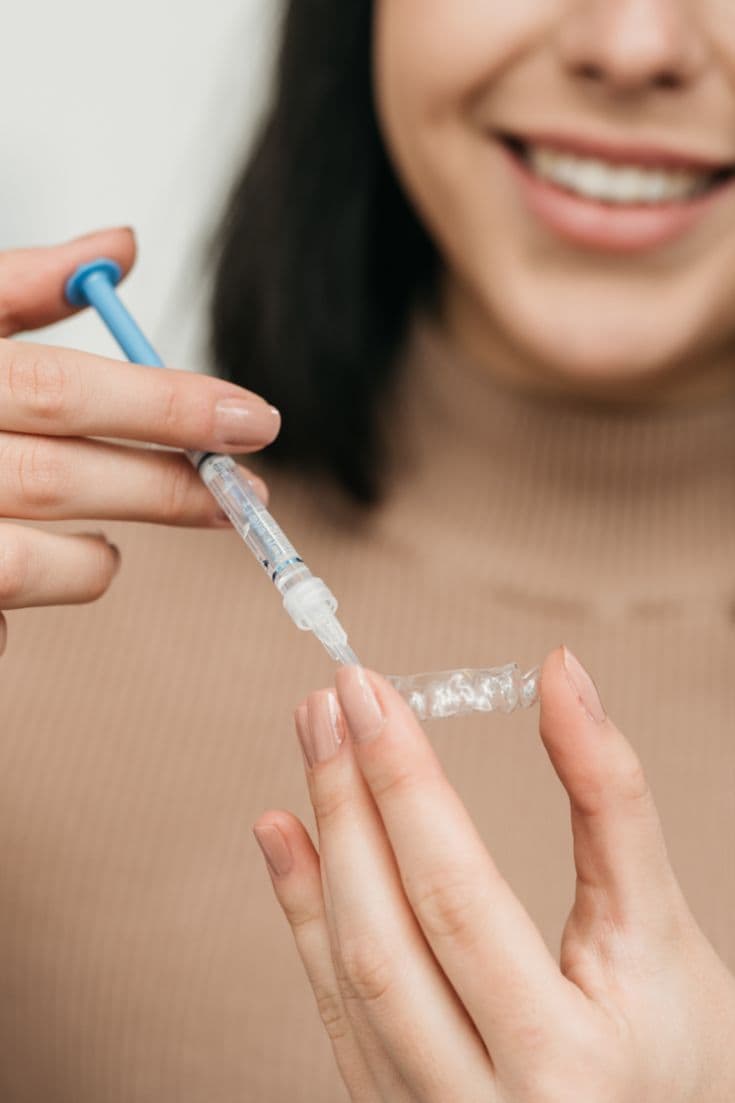
Why is teeth whitening not recommended during pregnancy?
The contraindication for teeth whitening during pregnancy is based on the precautionary principle, not on data demonstrating a proven risk. The hydrogen peroxide used in professional treatments crosses the oral mucosa and can reach systemic circulation in small amounts. During pregnancy, any compound capable of crossing the placental barrier is subject to enhanced safety evaluation. Controlled clinical studies on the effects of hydrogen peroxide on the human fetus are non-existent — not because a risk has been identified, but because it is ethically impossible to conduct them. The absence of safety data in pregnant women is precisely what justifies the contraindication. European Directive 2011/84/EU and the recommendations of the American Dental Association converge on this point: avoid all whitening during all three trimesters.
What the science says about hydrogen peroxide and pregnancy
Available studies on the safety of hydrogen peroxide during pregnancy are predominantly conducted on animal models. A study on pregnant rats exposed to high concentrations of peroxide showed embryotoxic effects — but at doses unrelated to the concentrations used in teeth whitening (maximum 6% hydrogen peroxide). In vitro studies suggest that hydrogen peroxide can induce cellular oxidative stress, a mechanism potentially harmful to rapidly dividing cells, such as those of a developing embryo. No epidemiological study has established a correlation between exposure to teeth whitening and adverse pregnancy outcomes. However, the absence of evidence of harm is not evidence of safety — and the precautionary principle applies in this context.
What about breastfeeding?
The question of breastfeeding is distinct from that of pregnancy, but caution remains recommended. Hydrogen peroxide is metabolised very rapidly by the body into water and oxygen — its plasma half-life is on the order of a few minutes. The risk of transfer into breast milk in significant quantities is therefore theoretically very low. However, no clinical study has specifically evaluated this transfer, and professional whitening product manufacturers advise against treatment during breastfeeding as a precautionary measure. The majority of dental societies (including the French Society of Oral Surgery) recommend waiting until breastfeeding has ended before undertaking a whitening treatment. This is not an absolute contraindication based on a demonstrated risk, but a precautionary recommendation in the absence of data.
When can treatment resume after delivery?
In the absence of breastfeeding, there is no mandatory medical waiting period between delivery and a whitening treatment. The decision belongs to the dentist, who will assess post-partum oral health. Pregnancy causes significant hormonal changes that can temporarily increase gingival sensitivity and alter saliva composition — two factors to evaluate before a whitening treatment. Most practitioners recommend waiting until periodontal health has stabilised, generally 2 to 3 months after delivery. When breastfeeding, the usual recommendation is to wait until it has completely ended. Your dentist remains the best judge of the optimal time to start or resume a WhitenPro protocol.
Dental care that is safe during pregnancy
While whitening is contraindicated, pregnancy does not prevent caring for oral health — on the contrary, this is a period when it deserves heightened attention. Pregnancy gingivitis, linked to the increase in progesterone that amplifies the gingival inflammatory response, affects between 60 and 75% of pregnant women. A professional scale and polish is not only safe but recommended during the second trimester. Active cavities should be treated to prevent bacterial spread. Dental X-rays, when medically necessary, can be performed with adequate abdominal protection. A standard fluoride toothpaste without concentrated whitening agents is the best daily hygiene option during pregnancy and breastfeeding.
See also